Fitch warns that it will downgrade the credit ratings of banks that hold too much Bitcoin
Fitch warns: Bank of America is accelerating its deployment in the blockchain and may be subject to a downgrade in credit rating, and financing costs are facing rising pressure
(Previous summary: Tether CEO Paolo Ardoino: S&P’s slander is our proudest medal! In response, USDT was classified as a "junk rating")
(Background supplement: Tether Buying Bitcoin drags down USDT "S&P gives the worst rating": The rising proportion of risky assets intensifies the possibility of decoupling)
Contents of this article
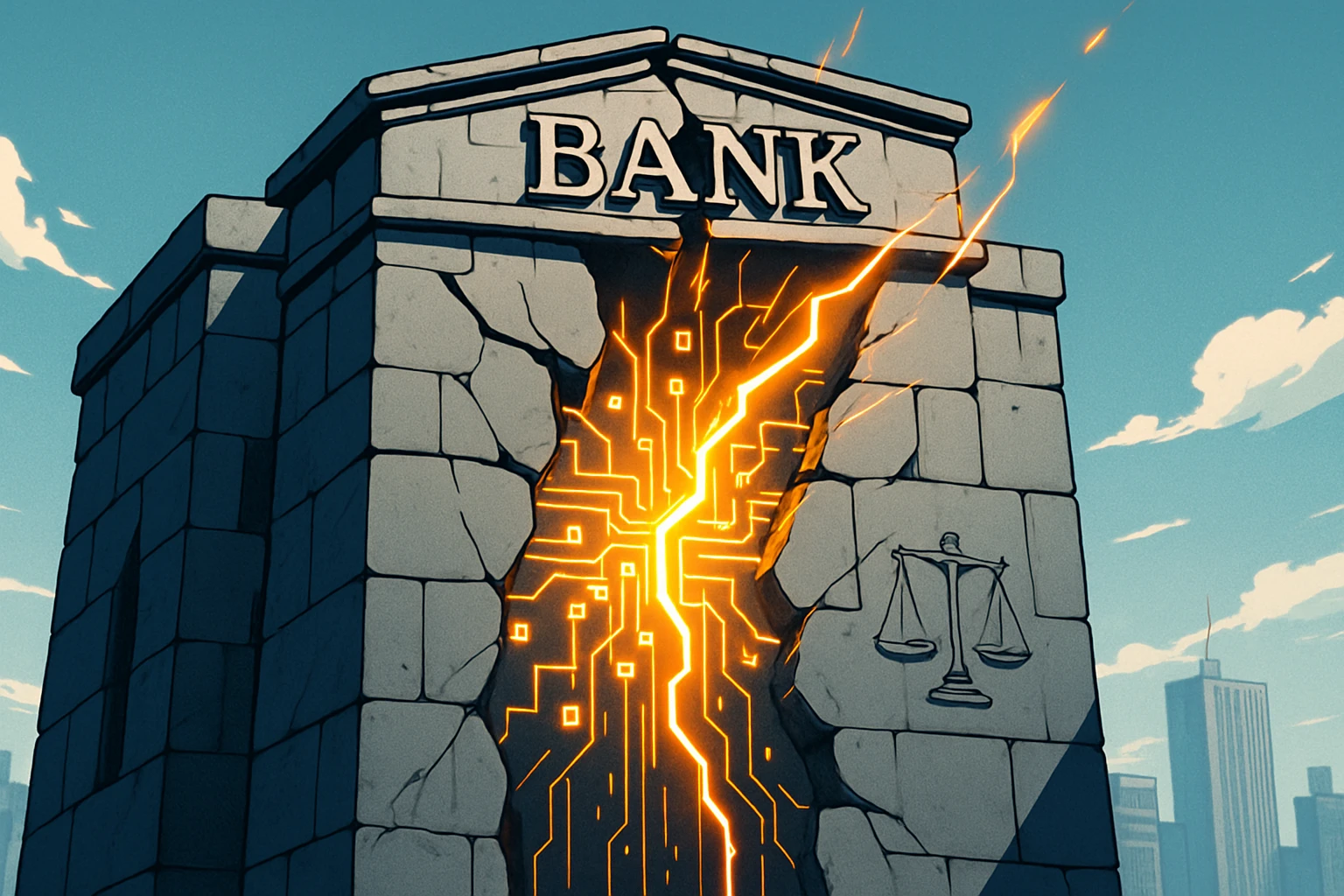
On December 7, Eastern Time, Fitch Ratings)launched a blockbuster report, pointing out that U.S. banks are actively investing in blockchain and digital assets after the Trump administration relaxed regulations. Without adequate firewalls, credit ratings may be lowered and financing costs will increase. For Wall Street, it was a warning colder than a Manhattan winter night.
Credit pressure behind fee incentives
For large banks such as JPMorgan, Bank of America, and Wells Fargo, blockchain means faster payment routing, smart contract automatic settlement, and new fee income. However, Fitch made another calculation in the model: if crypto exposure is concentrated, new income will be far from enough to hedge against volatility, compliance and operational risks. The report reads:
"Stable fee income cannot offset volatility, compliance and operational risks."
Once the credit rating is downgraded, the interest rates for banks to issue interbank loans, senior bonds and capital market financing will rise, directly squeezing net interest margins. In other words, picking up the coin of digital assets may overturn a large vault full of capital.
The knock-on effect of stablecoins draining deposits
Fitch and Moody’s focus on the rapid expansion of stablecoins. When customers transfer U.S. dollar deposits into stablecoins, the bank's liquidity base is eroded, forming "deposit disintermediation." Stablecoin issuers usually use U.S. Treasury bonds as reserves; if panic triggers large-scale redemptions, issuers are bound to sell Treasury bonds, and the selling pressure will backfire on the entire financial system through the bond market. "Shadow dollarization" in which the U.S. dollar's pricing and settlement mechanisms are marginalized also emerged, laying long-term landmines for the Federal Reserve's monetary dominance.
Regulatory green light nods, credit rating red light remains on
Policy signals are showing fragmentation. In November, the Office of the Comptroller of the Currency (OCC) issued an interpretive letter allowing banks to hold small amounts of digital assets for “operational purposes,” seemingly giving the green light to blockchain payment networks. However, Fitch stressed that whenever exposures become "concentrated" or "significant", points will be deducted from the credit rating model. This puts banks in a dilemma: Large banks with strong capital may be able to see between returns and costs, but small and medium-sized banks eager to break through may not be able to bear the cost of a credit rating downgrade.
As the "2025 GENIUS Act" advances, Wall Street must maintain a balance between embracing new sources of income and maintaining its credit rating. Fitch's report draws a clear line: innovation is possible, but it must be based on rigorous risk isolation. For banks, the question now is not just “can we do it”, but “how much can we do without paying higher financing costs”. Each step on this increasingly narrow balancing beam challenges Wall Street's revaluation of risk, return and reputation.