Will China’s encryption ban fail? Reuters: Bitcoin mining computing power climbed to 14%, returning to the world's third largest mining country
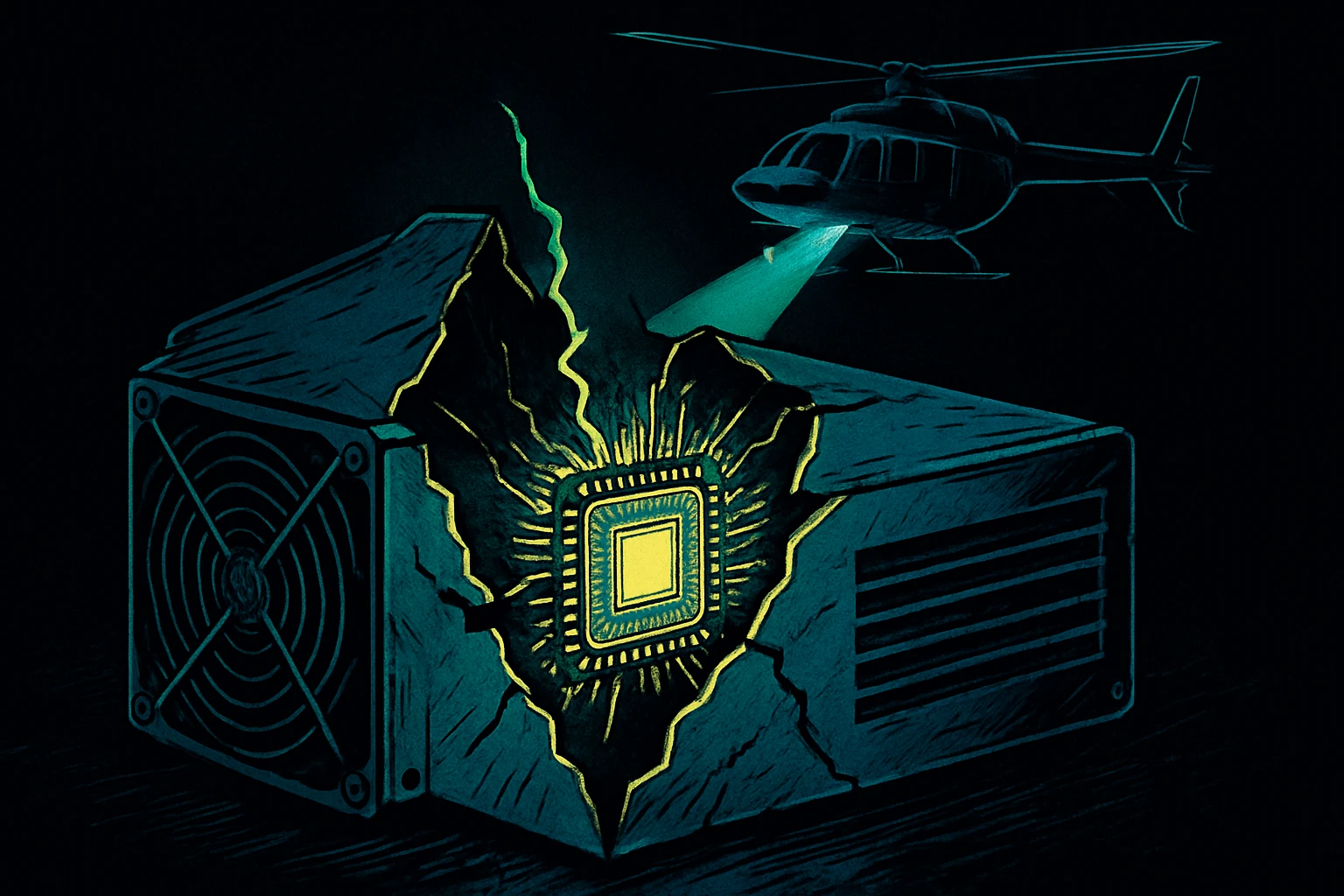
According to "Reuters", although the Chinese government jointly issued the "Notice on Further Preventing and Dealing with the Risks of Speculation in Virtual Currency Transactions" in September 2021 by ten departments including the central bank, which explicitly banned all cryptocurrency trading and mining activities, four years have passed, and Bitcoin mining activities have quietly recovered in mainland China.
(Previous summary: The Chinese market is miserable! Shanghai used car dealer Cango spent 400 million magnesium to "enter U.S. Bitcoin mining", and its stock price soared 84%)
(Background supplement: The Chinese court ruled that the "overseas mining" commercial contract is invalid! Disturbing financial order and public interests)
According to "Reuters", although the Chinese government announced in September 2021 that In August, ten departments including the central bank jointly issued the "Notice on Further Preventing and Dealing with the Risks of Speculation in Virtual Currency Transactions", which explicitly banned all cryptocurrency trading and mining activities. However, four years later, Bitcoin mining activities have quietly recovered in mainland China.
According to the latest data from Reuters and the professional organization Hashrate Index, as of the end of October 2025, China’s Bitcoin network computing power share has rebounded strongly to 14%, surpassing Kazakhstan and returning to the world’s third largest mining country, trailing only the United States (37.75%) and Russia (15.51%). This means that the massive "clearance operation" that year is facing real challenges. Miners are making a strong comeback in a "curve manner" through underground operating mines, decentralized computer rooms and local acquiescence.
The three major driving forces behind the recovery
Industry insiders pointed out that the "resurgence" of China's mining activities is no accident and is mainly driven by the following factors:
First of all, electricity is extremely cheap and surplus. Xinjiang, Sichuan, Inner Mongolia and other places are very rich in hydropower, wind power, and photovoltaic resources. The industrial electricity price is as low as 0.2 to 0.35 yuan/kWh, which is far lower than the international average level. Especially during the flood season in Sichuan, the power generation capacity is huge. Local miners described: "If you don't dig, it will be useless, otherwise the electricity will be wasted."
Secondly, the capacity of the AI data center is idle and turned to mining. In the past two years, AI and cloud computing data centers have been built crazily across China, leaving a large number of computer rooms and power quotas idle. Some local governments with tight finances "turn a blind eye" and allow these facilities to turn to Bitcoin mining activities, which can not only absorb excess power, but also bring tax revenue and employment.
Finally, the price of Bitcoin is rising and the profits are attractive. This year, Bitcoin once reached a historical high of US$126,000. Even if it is currently in the range of US$80,000 to US$90,000, efficient mining machines can still earn huge profits of US$30 to US$40 per EH/s per day, which is much higher than the cost of electricity. Therefore, it has attracted a large amount of capital and veteran miners to return.
In addition, the 2025 second quarter financial report of Canaan, a major Chinese mining machine manufacturer, also supports this craze: the revenue share of the Chinese market has surged to more than 50%, a sharp increase from less than 3% in 2022.
The risks are still high and the future direction is a mystery
However, although underground mining activities are in full swing, the risks have not disappeared: first, sudden power outages, huge fines and even criminal liability may still come at any time, and the tragedy of "all mining machines shut down overnight" in Sichuan in 2021 is still vivid; second, as China's "double carbon" target deadline of 2026 approaches, if the central government strikes hard, the local protective umbrella may also be ineffective in an instant.
However, analysts believe that as long as the price of Bitcoin remains above $70,000 and local fiscal pressures persist, this "cat and mouse" game will continue to play out. The "Phoenix Nirvana" of China's mining has not only changed the global computing power landscape, but also proved once again that when economic incentives are large enough, policy red lines will be quietly moved.